A Beautiful Ruin: Bricks of Bogotá
Exhibition
Brick production in Bogotá has deep roots that stretch back centuries. The earth once buried beneath the city lounges under the sun like a petrified outer skin, sheathing roofs, sidewalks, staircases, homes, and public buildings. In fact, the Colombian newspaper Semana once described brick as Bogotá’s “skin,” synonymous with identity and modernity.
This exhibition examines brick as a material that traverses seemingly opposing worlds—wealth and poverty, permanence and precarity, center and periphery. Drawing on architecture, visual culture, oral histories, and archival references, it explores how brick reflects Colombian identity, revealing social, cultural, and historical tensions embedded within Bogotá’s built environment.
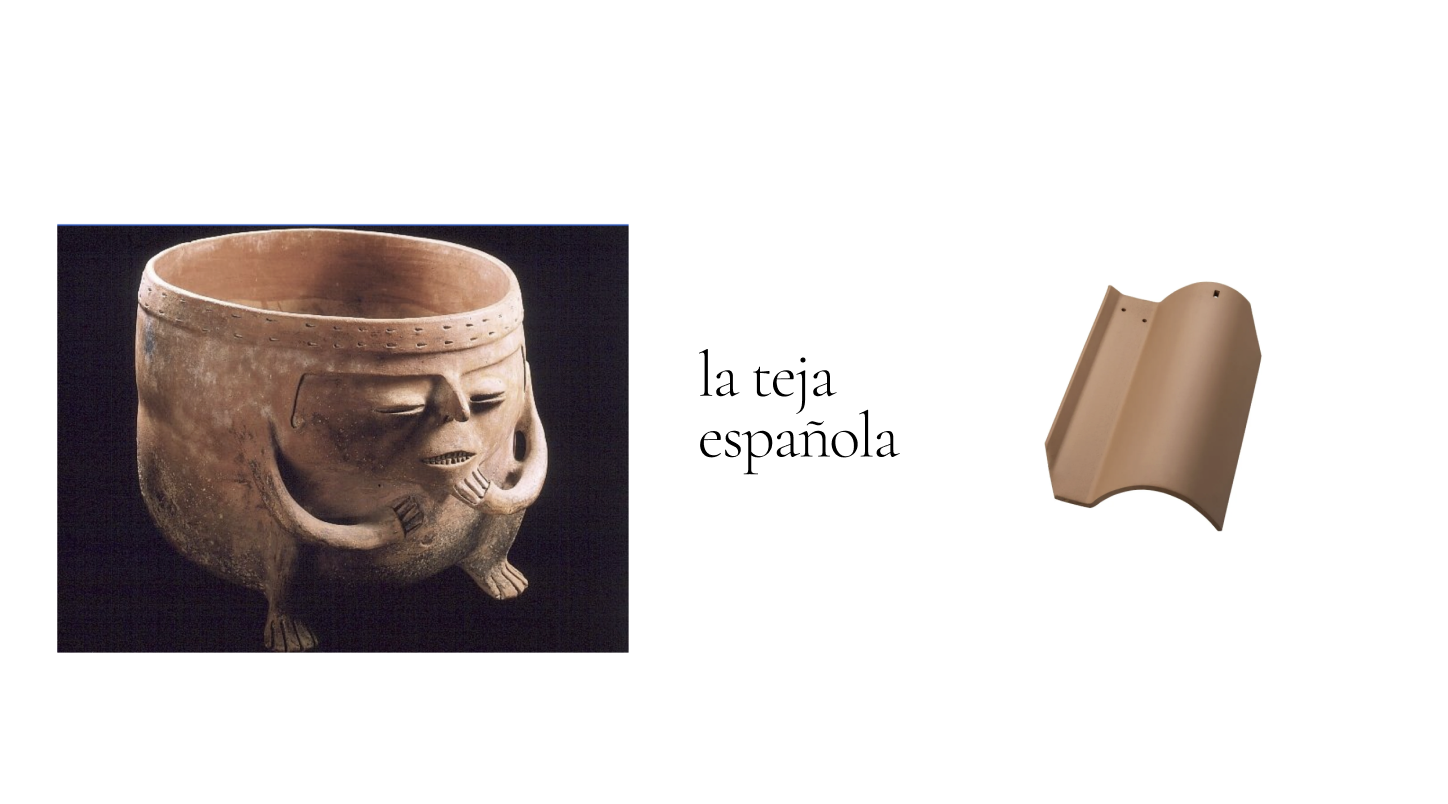
The Muiscas, who inhabited the clay-rich plateaus of Bogotá, created anthropomorphic vessels like the above for trade, as well as to convey music, carry chicha, and roast coca leaves. In the sixteenth century, Spanish colonists used clay from the Bogotá Savannah to build what is now Bogotá, teaching local Indigenous potters to make roof tiles and ladrillo tolete. As demand for construction materials grew, many ancestral ceramic traditions gave way to brickmaking. This anthropomorphic figure—both man and object, crafted for utility and devotion—embodies clay’s capacity for transformation. In Bogotá, bricks endured where ceramics faded. The earth—and this very vessel—are a reminder of what was reconfigured, what endures, and what was lost.
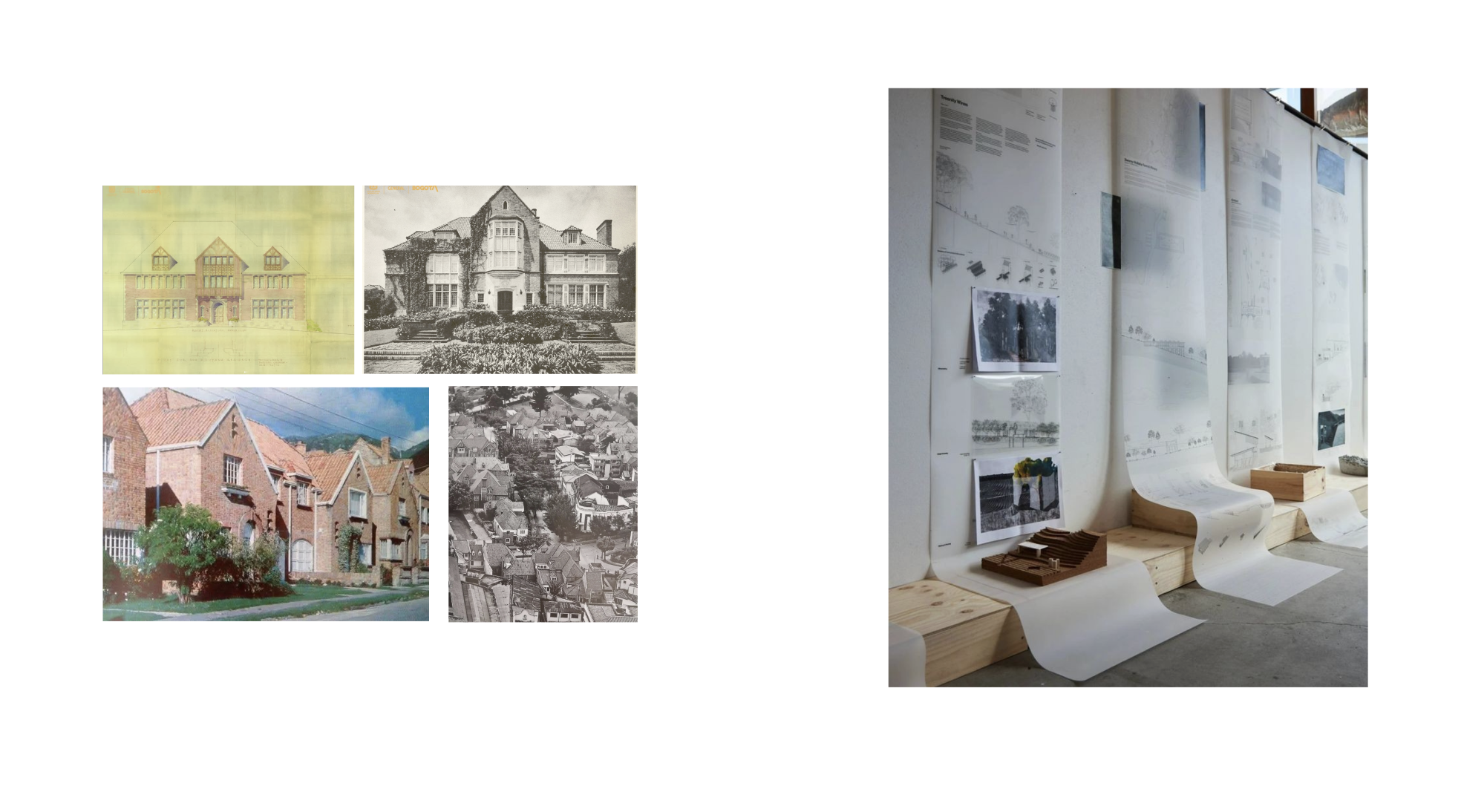
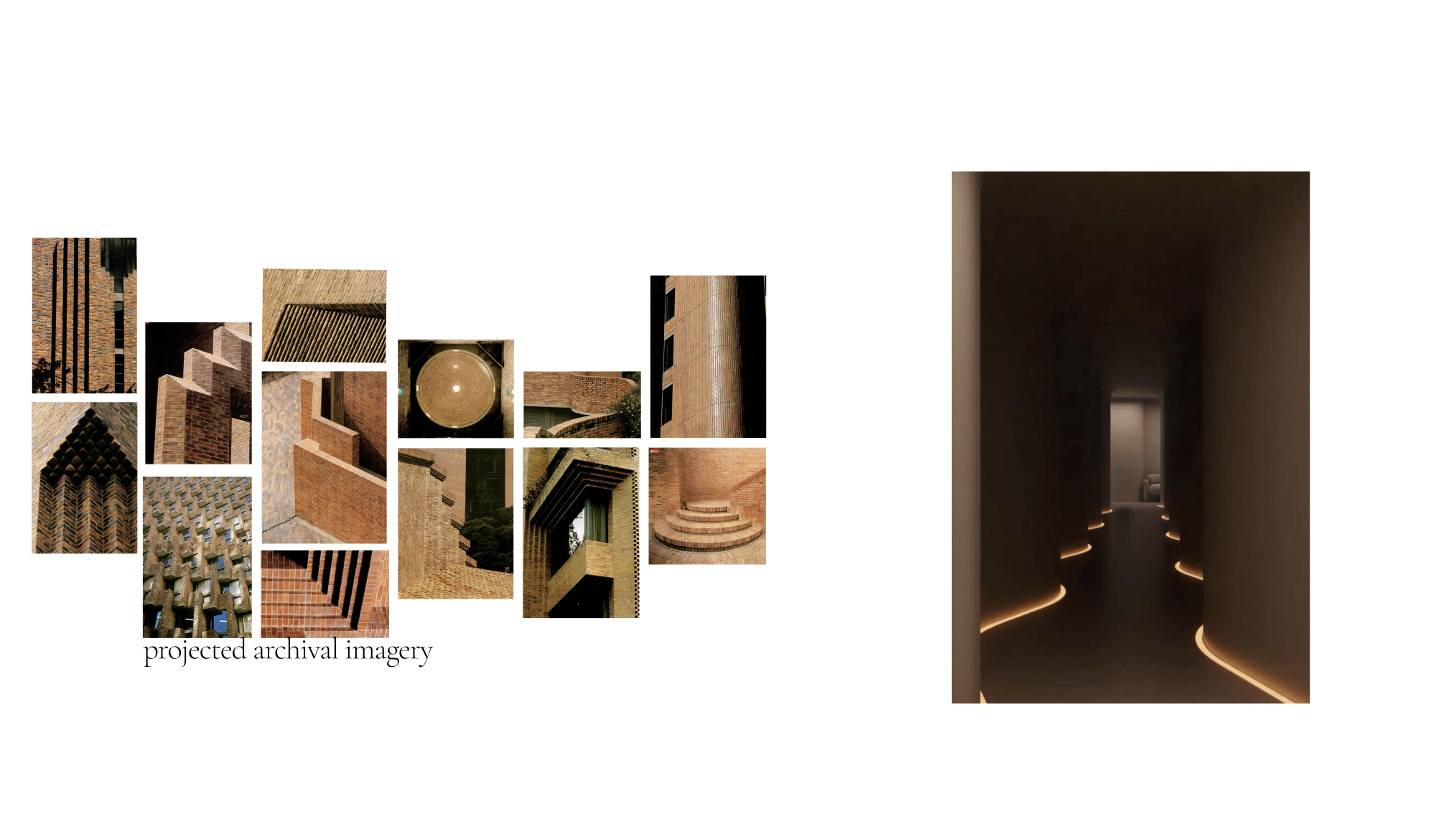
Today, brick has been hailed as Bogotá’s “skin,” synonymous with identity and modernity. It sheathes homes, public spaces, and institutions such as the Museum of Modern Art, the Santa María bullring, and the National Archives. This section examines brick as a material that defies modern binaries—blurring past and present, wealth and poverty, center and periphery—while revealing key tensions and idiosyncrasies of Colombian culture, society, and identity.
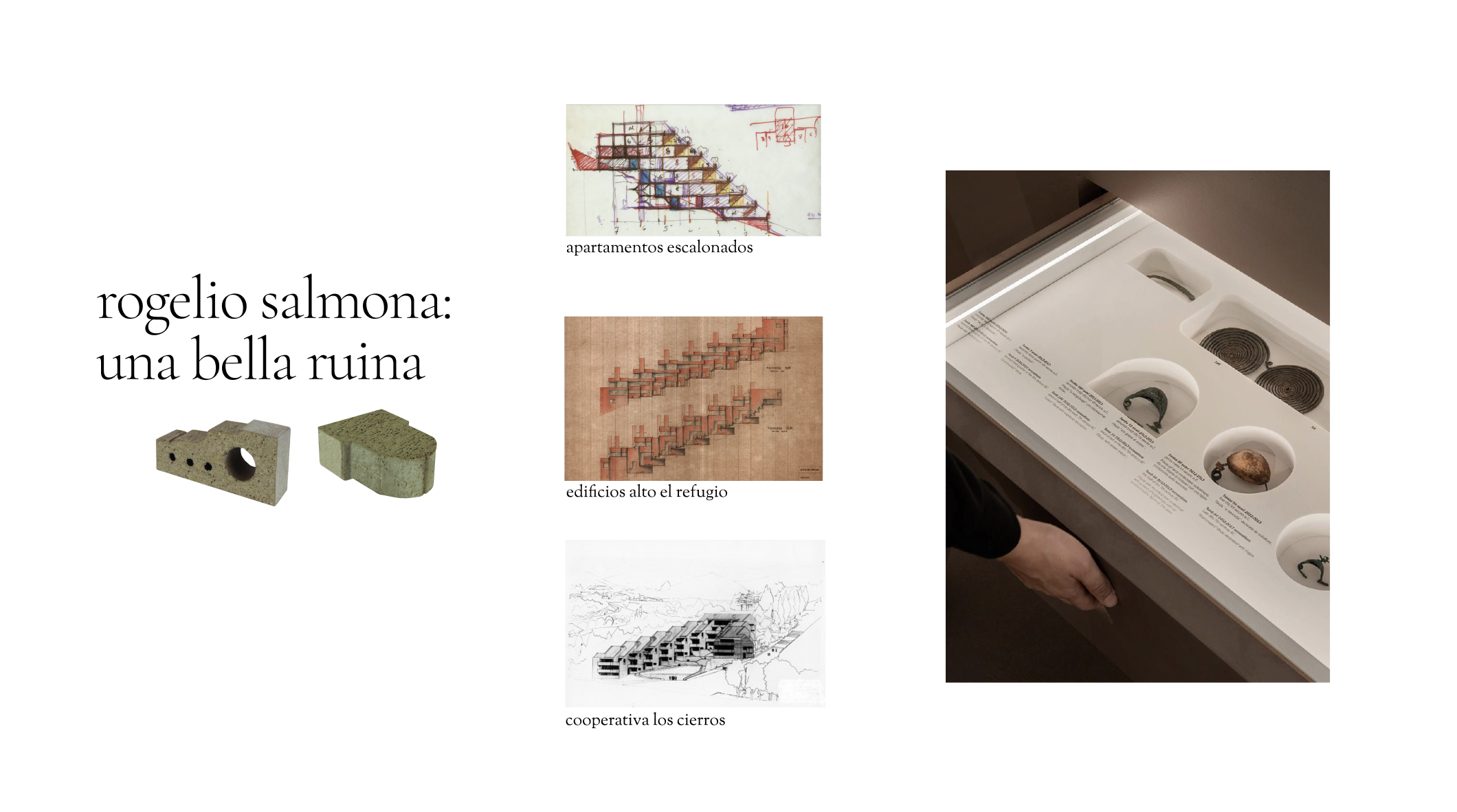
These architectural drawings by Rogelio Salmona reveal the Colombian architect’s fascination with brick and his ambition to create what he called a “beautiful ruin.” Their staggered, pyramid-like forms evoke ancient structures and pre-Columbian civilizations. Known as the arquitecto de ladrillo (brick architect), Salmona valued brick for its affordability, versatility, connection to mud, and capacity to generate local employment. For him, the material carried ancestral, historical, and democratic meaning.
When Salmona returned to Bogotá in 1957 after ten years studying under Le Corbusier, he found a city transformed and parks overrun by cement and new boulevards. He championed an organic architecture grounded in local materials, geography, and cultural memory. He envisioned spaces that merge with the landscape, link interiors and exteriors, and resist enclosure in favor of openness and dialogue.
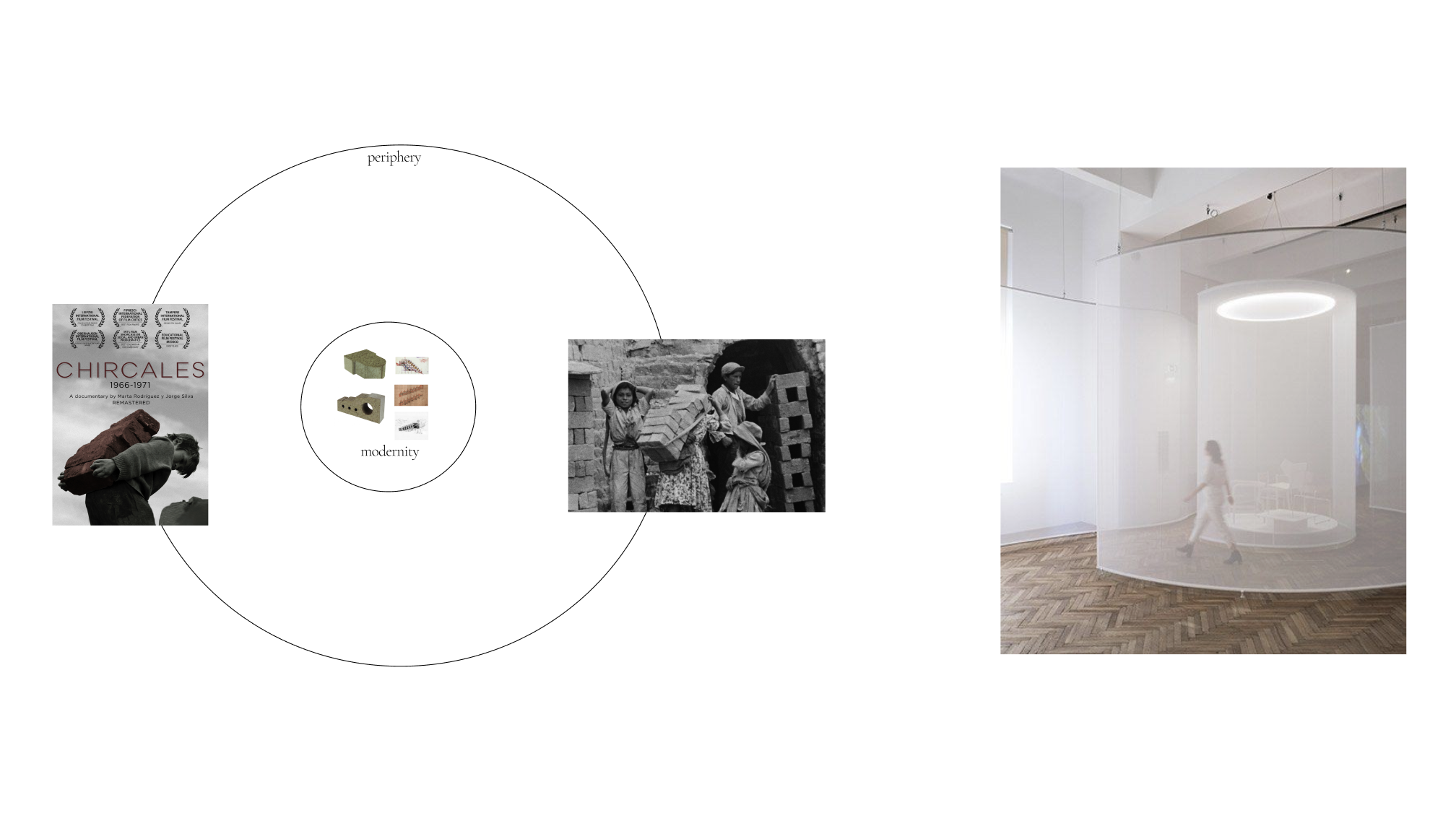
The term chircal derives from chirco, a local shrub once used to fuel kilns. Many chircales were inhabited by displaced communities, victims of industrialization and La Violencia, who migrated to the city in search of work. Although the early twentieth century saw the introduction of formal brickyards fueled by coal, artisanal chircales persisted into the 1960s, prompting documentaries that exposed their hazardous conditions. One such film follows a brickmaking family in southern Bogotá, showing children hauling bricks across mud hills and breathing toxic fumes that could lead to illness or death. While bricks define the urban skyline, the labor behind them remains largely unseen.
The film traces the slow rhythm of artisanal brickmaking: kilns packed with thousands of bricks, weeks of preparation, and more than a month of continuous firing. Rain could undo the entire process, while withheld wages secured political loyalty to landowners. Without unions, protections, or security of tenure, brickmakers lived within a fragile and coercive economy. Chircales reveals the inequalities embedded in the material foundations of Colombia’s modernity.
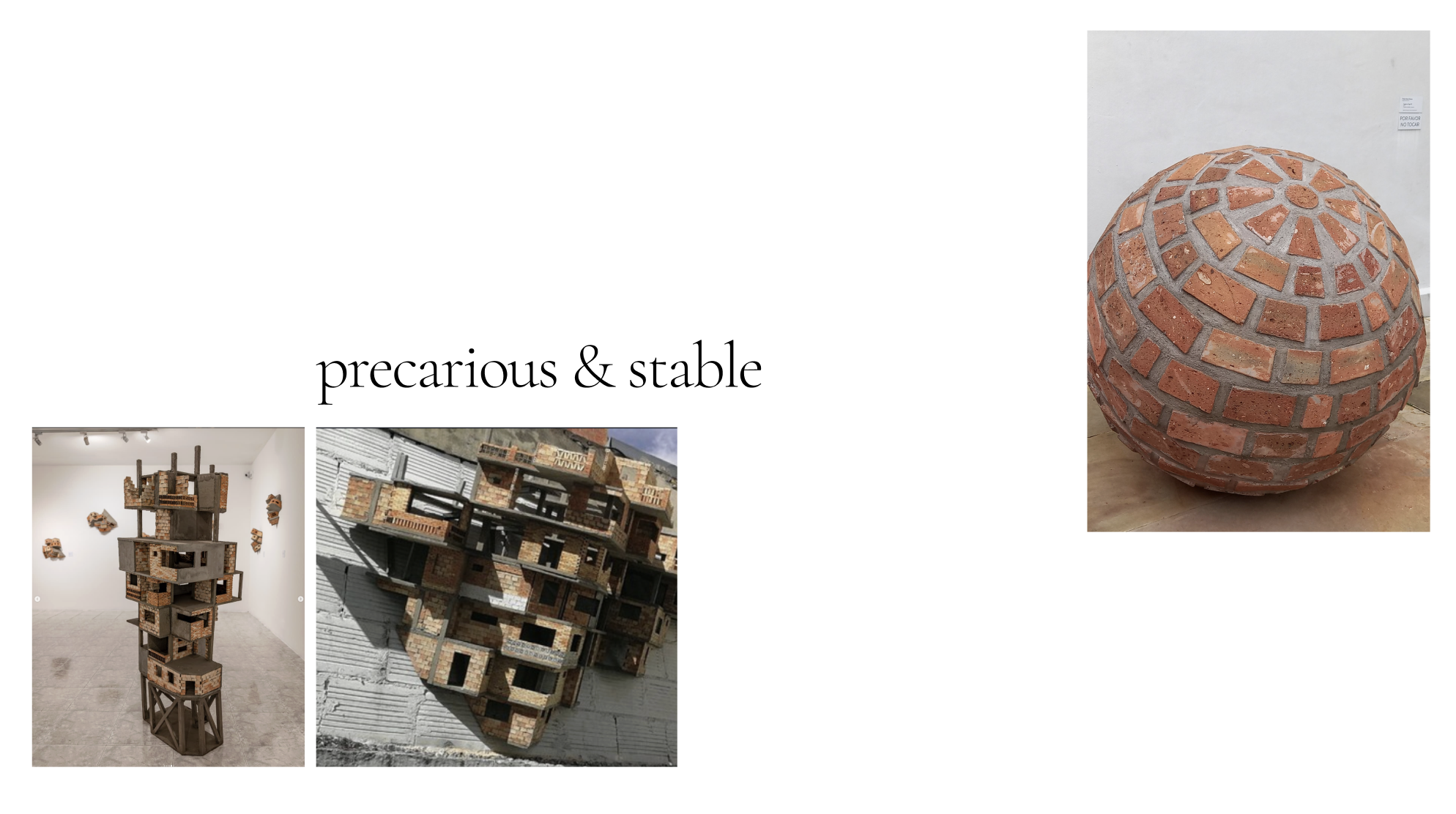
Amid the influx of lightweight construction methods like drywall, brick-and-mortar construction is often marketed in Colombia as “traditional construction,” associated with quality, safety, and longevity. In lower-income neighborhoods, where carton and laminated steel are common, bricks offer greater resistance to the elements while remaining accessible in small quantities, enabling gradual, piecemeal construction.
In Integraciones Periféricas, Mauricio Salcedo depicts the informal settlements of his childhood through stacked structures teetering on the verge of collapse. Cube-like forms sprout from floors and walls at skewed angles, while unfinished cavities suggest future doors and windows. Though rooted in socio-political realities, the work reflects adaptability and the resilience of building one’s own dwelling. Fredy Alzate’s Lugares en Fuga similarly reflects on precarious urbanization in Medellín and across Latin America. His brick-and-mortar sphere transforms a material associated with permanence into something unstable and mobile, revealing the fragility underlying dominant narratives of progress and modernization.
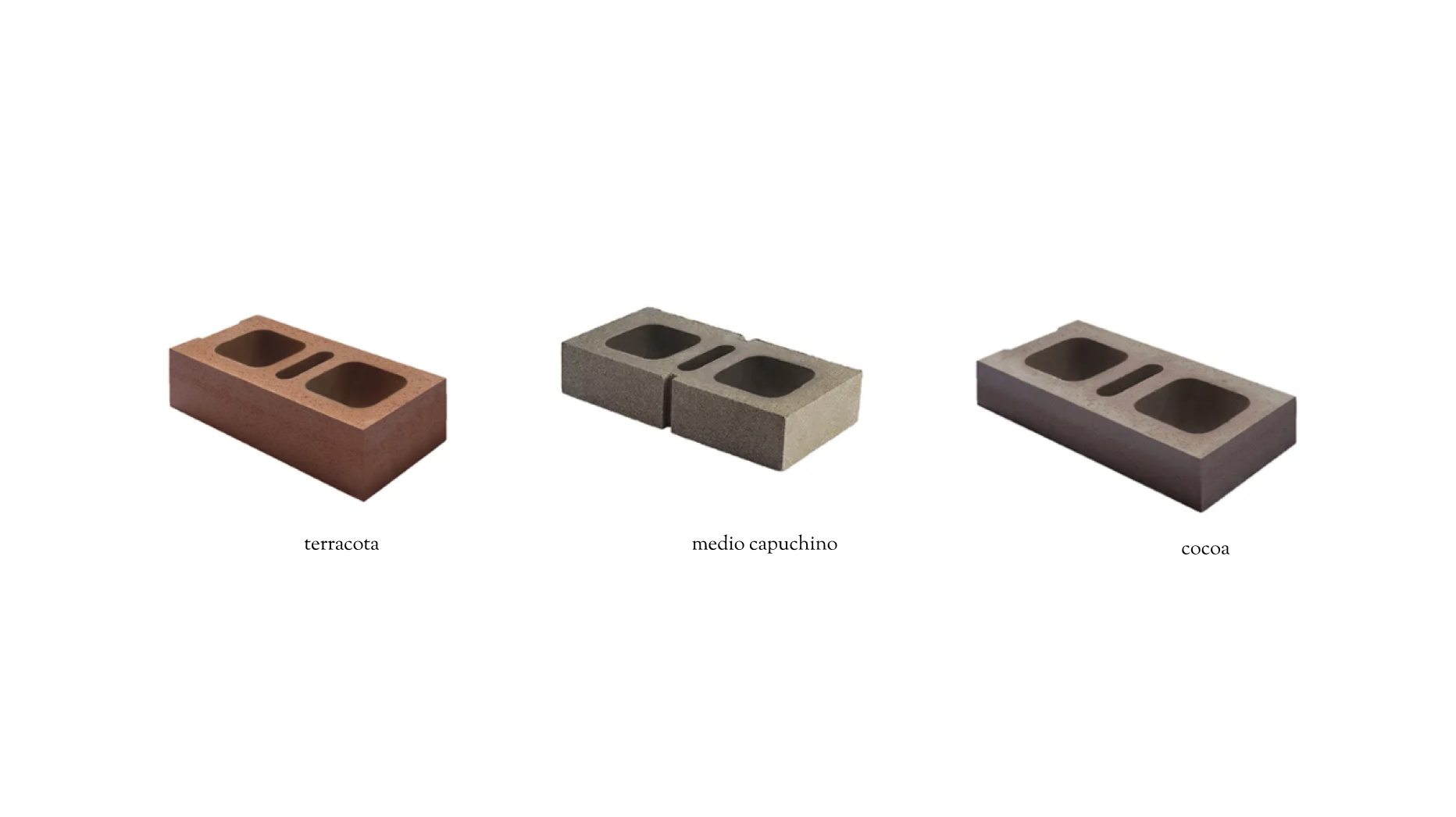
Bogotá’s Department of Urban Planning divides homes into six socio-economic strata, ranging from 1 (low-low) to 6 (high). Stratum 1 neighborhoods like El Codito resemble dense red-brick jigsaw puzzles, while nearby stratum 6 districts rise in polished brick towers worth hundreds of thousands of dollars. Amid the city’s deep inequalities, brick remains a common denominator, shaping informal settlements and upscale developments alike.
As urban planner Fernando Montenegro observed in a 2023 ProBogotá conference, in Bogotá the wealthy do not live in marble or stone, nor do the poor live in tin or wood—but in brick. Yet color has become a social signifier: red bricks often mark older or informal neighborhoods, while lighter tones are associated with newer, affluent developments. Brick binds these socio-economic worlds even as color continues to divide them.
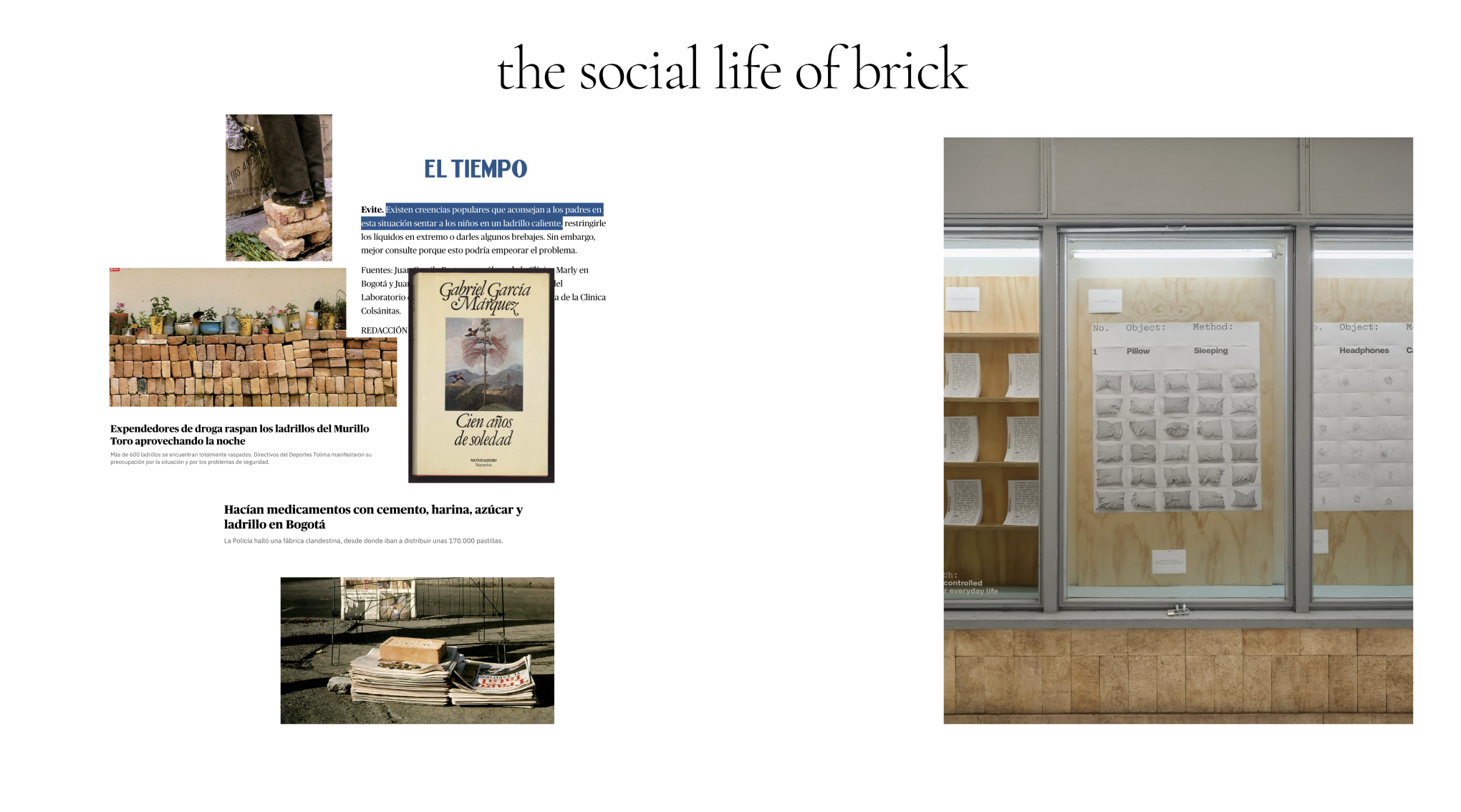
Photographs, novels, and newspapers reveal brick’s myriad uses in Colombian society. Bricks become makeshift furniture, drying racks, ladders, paperweights, and plant holders. They are used to dry coffee, fabricate counterfeit medicine, break windows during robberies, and produce bazuco, a cheap hallucinogenic cocaine paste commonly consumed by unhoused drug addicts. Their ubiquity across the socio-economic spectrum reflects a broader culture of resourcefulness and adaptation.
Cuban artist Ernesto Oroza describes these improvised practices as “Technological Disobedience,” while Argentine artist Gabriel Chaile refers to an “Engineering of Necessity”: forms of making that emerge from scarcity, where objects are pushed beyond their intended use. In Colombia, bricks are not merely construction materials but tools, weapons, symbols of residence, resilience, and tradition.
Their cultural permanence is also embedded in language. In Colombian Spanish, the term ladrillazo literally refers to a blow delivered with a brick, but figuratively describes an arduous undertaking. Bricks thus operate not only as objects, but as concepts woven into everyday life.
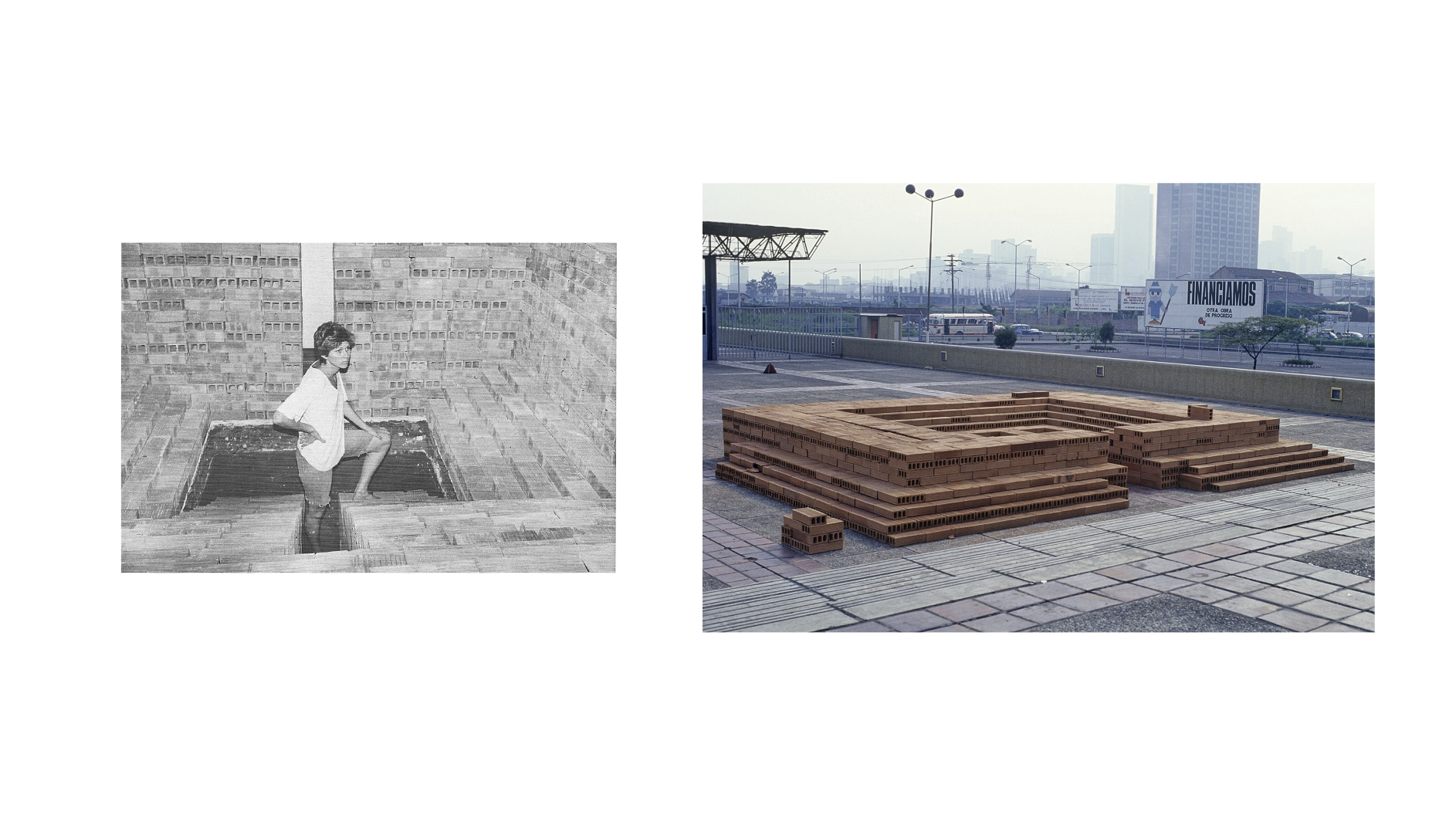
Constructed from five thousand loose, unpasted bricks, Sara Modiano’s Cenotafio—or tomb—is transient and easily dismantled. Its ephemeral form recalls the geometric ruins of pre-Columbian empires. Installed in cultural spaces, the work evokes the erased memory of civilizations that once shaped clay but are no longer present. In “Enigmas Encriptadas de Ladrillo,” Chilean writer Ariel Florencia Richards notes that Modiano “manipulates construction elements to explore emptiness and mourning, erecting ephemeral works that existed in an intermediate space, neither entirely interior nor exterior, habitable nor enduring.” Modiano’s practice dwells in absence and precariousness, using unstable materials to gesture toward that which has been lost.
More than a construction material, brick emerges here as a vessel of Colombian material culture—embodying absence, precariousness, resilience, and contradiction. Existing within and beyond dichotomies, it holds past and present, permanence and fragility.
Image Credits
Vasija con figura antropomorfa Muisca culture, Eastern Cordillera, c. 600–1600 CE Museo del Oro, Bogotá
Casa Puyana, Bogotá. Designed by Trujillo Gómez & Martínez Cárdenas for David Puyana in the Tudor Revival style; currently the Embassy of the Russian Federation.
The collage of brick building details is sourced from Señor Ladrillo (Villegas Editores).
Architectural drawings: Apartamentos Escalonados (1961), Edificios Alto El Refugio (1981, unbuilt), and Cooperativa Los Cerros (1973, unbuilt), by Rogelio Salmona. Fundación Rogelio Salmona.
Film cover and still from Chircales (1966), directed by Marta Rodríguez and Jorge Silva. Runtime: 42 minutes.
Brick product photography courtesy of Ladrillera Santa Fe.
Ephemera (newspaper clippings, photographs, books, etc.) including El Tiempo headlines such as “Ladrillazo dejó heridos a dos pasajeros de bus del MIO en Cali” (31 May 2022).
Mauricio Salcedo, Integraciones Periféricas (2018). Sculpture (assembly and masonry). Image courtesy of ArchDaily.
Fredy Alzate, Lugares en fuga (2012). Bricks, concrete, and metal. Image courtesy of the Saatchi Gallery.
Sara Modiano, Cenotafio (Tumba para el arte) (1981). 5,000 bricks. Image courtesy of Instituto de Visión.
All exhibition and in-gallery photography courtesy of COSMOS.